Events
Ksema, a health equity collaborative
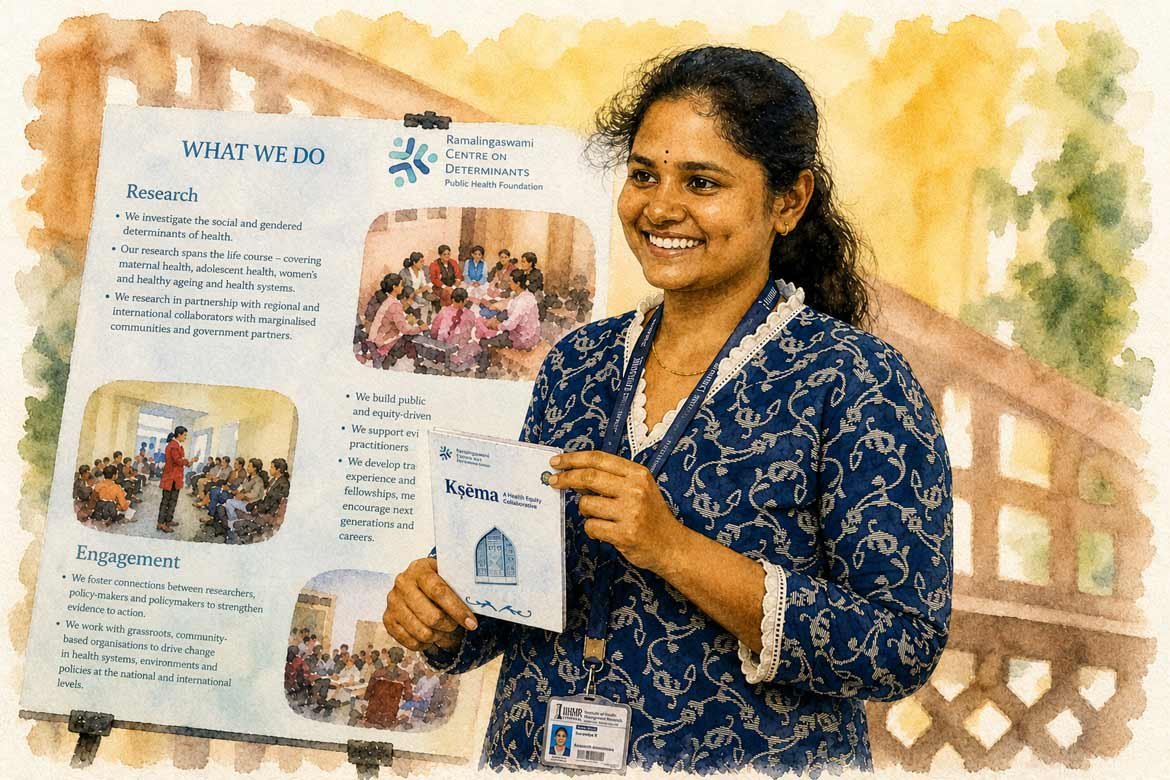
To commemorate 10 years of the Ramalingaswami Centre on Equity and Social Determinants of Health (RCESDH) in Bengaluru, the Centre hosted Ksema, a health equity collaborative in mid-December 2025. Envisioned as a participatory, community-centred event, Ksema brought together partners, public health professionals, students, colleagues and friends of the Centre to reflect on its decade of work and engage with health equity and the social determinants of health.
The event began with a public health walk through the Epidemics Diseases Hospital campus, exploring the history of epidemics and public health in Bangalore, and continued with an exhibition tracing RCESDH’s 10-year journey. Interactive experiences including Sankrama, a health equity game, and Arogya Ayke, a health policy game, invited participants to explore how social conditions, policy choices and resource allocation shape health. Aralu, an installation on well-being, and Equilty, a quilting circle exploring care and caregiving, extended these reflections into more personal and experiential spaces.
Together, Ksema offered a space to celebrate RCESDH’s journey while bringing people together to think, experience and engage with ideas of equity, health, well-being and care.
Care roundtable
The care roundtable brought together participants from 8 different organisations across different care landscapes in Karnataka, including ageing, disability, community health, and labour-linked care systems. The discussions highlighted the multiplicity of care that individuals and a household engage in, showing that care is not confined to a single domain but spans childcare, eldercare, disability care, and support in contexts of illness, labour, and social vulnerability. Across these contexts, participants described how households continuously manage multiple and overlapping care needs through everyday choices and compromises, often under constraints of time, income, and limited institutional support. Time use emerged as a critical dimension, with care work distributed unevenly within households, largely taken on by women, and layered alongside paid work, as seen in accounts of garment workers balancing long working hours with childcare and household responsibilities.
Together, these insights contributed a strong household-level and relational perspective on care, foregrounding considerations of equity, dignity, and respect in both the provision and experience of care.
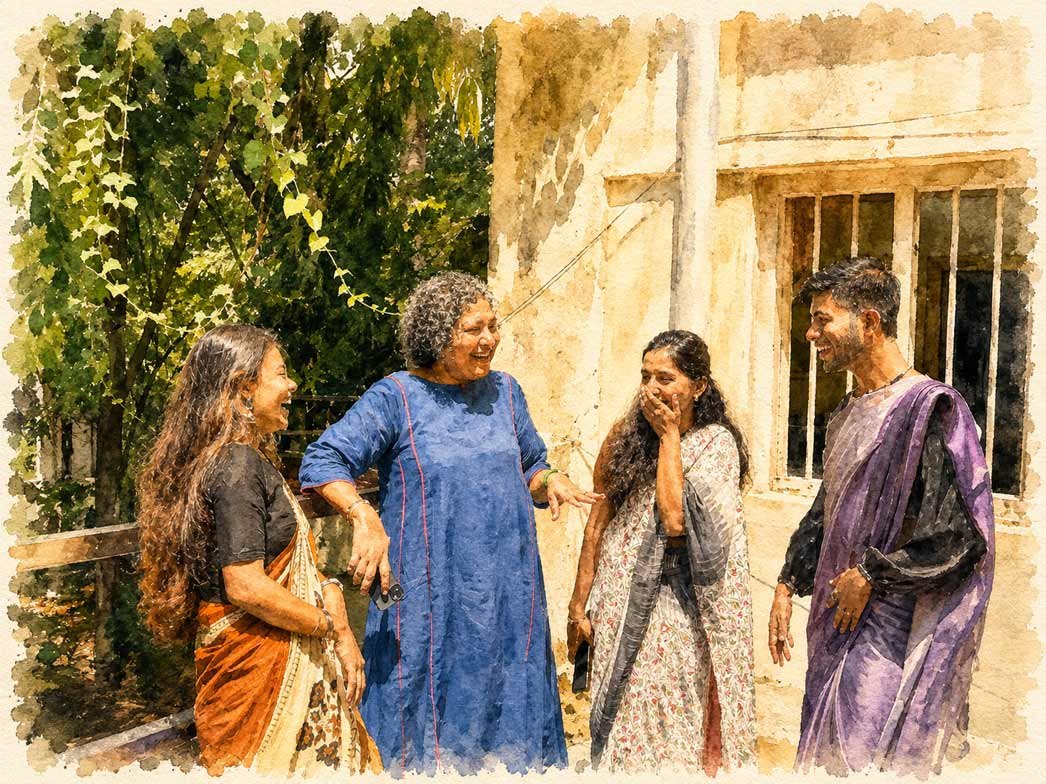
Adolescent Sexual and Reproductive Health Exemplars (ASHER) dissemination workshops Sangam and Maitri
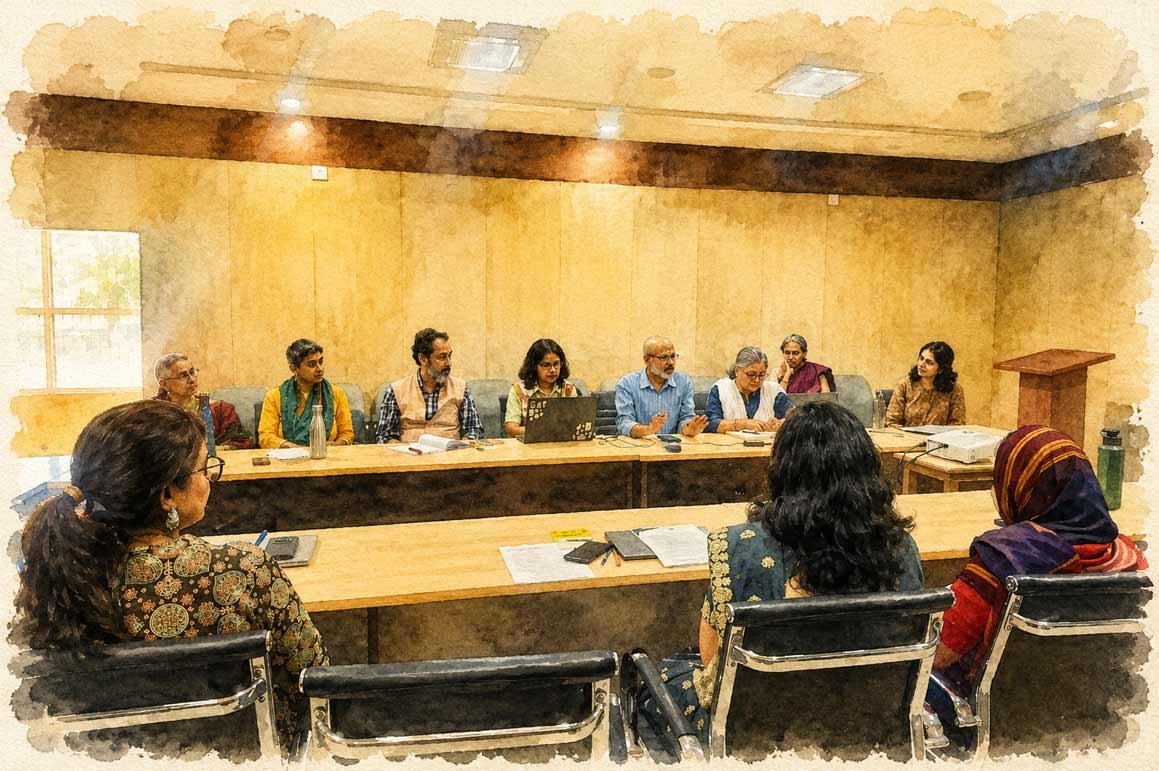
Sangam brought together partners from the four states where the Centre had conducted fieldwork, along with other stakeholders, the research team and Youth Advisors, to share findings from the ASHER project. The support and contributions of our partners enabled a deeper understanding of the local context and helped facilitate meaningful community engagement. The session provided an opportunity to discuss potential youth-led engagement formats and jointly explore creative approaches to dissemination and engagement with findings.
Maitri brought together ASHER Youth Advisors and young people from CSOs and NGOs to engage with the key findings, emerging themes and recommendations. Reflections from the Youth Advisors were followed by interactive games on adolescent fertility and teenage pregnancy, using Sankrama, Arogya Ayke and Care Squares, and concluded with a collective reflection and discussion.